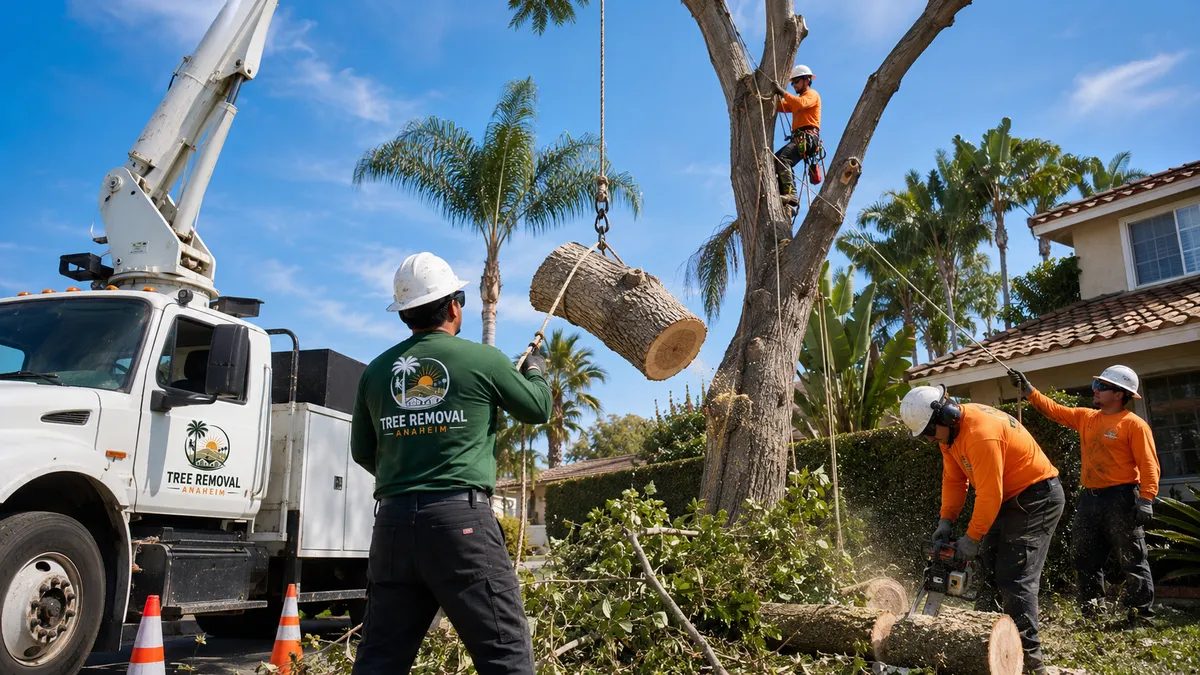
Tall palms need a controlled plan
Palm Tree Removal in Anaheim
Tell us where the palm sits and what concerns you. Get a Free Estimate
Removing Palms Without Treating Them Like Ordinary Trees
Palm removal has its own challenges. Tall trunks, heavy crowns, limited branching structure, loose skirts, confined access, and nearby roofs or pools can all affect how the work should be approached. We remove palms that are dead, declining, storm-damaged, leaning, overcrowded, difficult to maintain, or simply no longer appropriate for the property.
Before removal, we look at the palm's height, trunk condition, crown, surrounding structures, available drop space, equipment access, and the route for moving debris out. A palm in an open commercial area may be straightforward. A tall palm beside a home, block wall, pool, patio cover, or neighboring yard may need to be dismantled in tightly controlled sections.
Tree Removal Service Areas Near Anaheim
How We Plan Palm Tree Removal
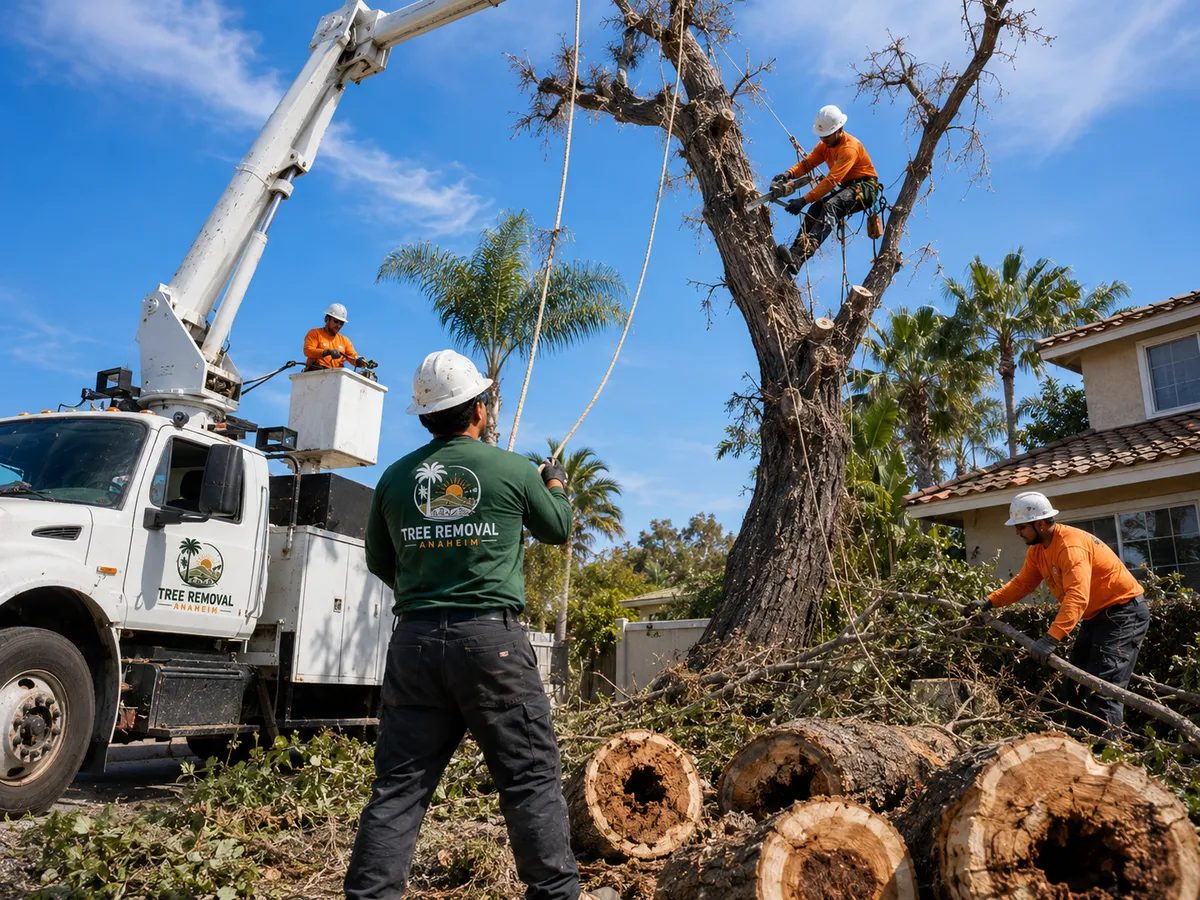
The safest and most practical removal method depends on what is below and around the palm. A tall, straight trunk does not automatically make the job simple. Crown material can be heavy and awkward, trunk sections can carry significant weight, and dead or deteriorated palms may not be suitable for the same climbing approach as healthy specimens. We evaluate the working position before choosing how the palm will be accessed and lowered. For palms beside homes, fences, pools, solar equipment, patios, or narrow side yards, sectional removal is often the key. Crown material is handled first, followed by trunk sections sized for the available landing or lowering area. On certain sites, specialty lifting equipment may be considered when it improves control or reduces unnecessary movement over sensitive property.
Dead palm removal
Dead palms can shed fronds and other crown material while the trunk continues to deteriorate. We evaluate how stable the remaining structure appears before choosing an access and dismantling method.
Tall palm removal
Height changes the amount of material being handled above the property and can limit ordinary access methods. Tall palms are broken down with attention to the crown, trunk section weight, landing zones, and surrounding targets.
Palm removal near pools
Pools, decking, pumps, plumbing areas, glass fencing, and nearby landscaping can sharply reduce usable drop space. We plan sections and movement so the work area stays controlled.
Palm removal in narrow yards
Many Anaheim properties have side yards or rear yards with limited equipment access. In these settings, the removal plan may rely more heavily on climbing, rigging, sectional cutting, and careful debris handling.
Storm-damaged palm removal
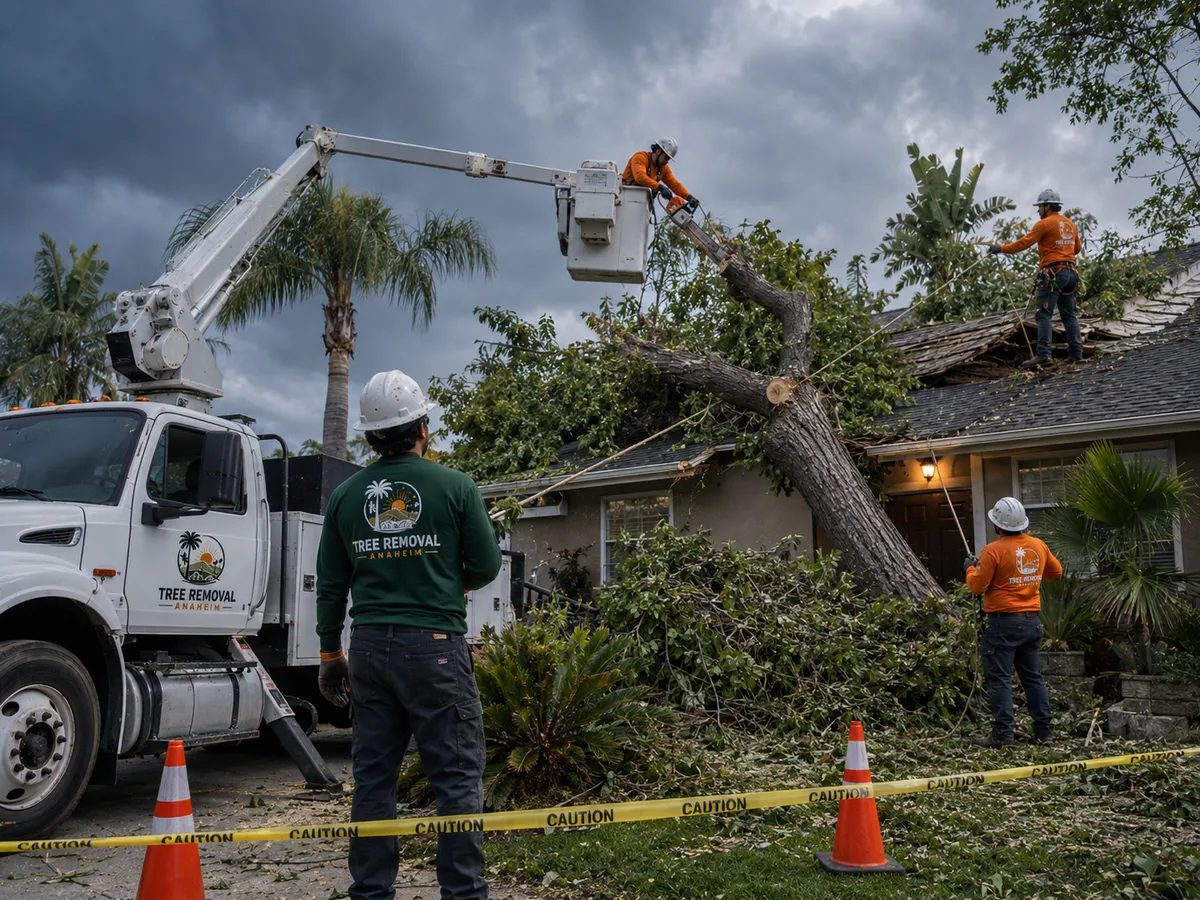
Damaged crowns, broken tops, or compromised trunks deserve prompt attention. We assess what has moved, what remains attached, and whether the palm can be approached normally before removal starts.
A useful estimate is based on the actual tree and site rather than a generic price table. The main cost factors include:
Palm height and trunk size
Tall palms and heavier trunk sections generally require more staged dismantling and handling.
Access around the palm
Pools, walls, roofs, narrow side yards and limited equipment access can change the removal method.
Palm condition
Dead, storm-damaged or unstable palms may restrict normal climbing and increase the need for alternative access.
Debris handling
Fronds, crown material and trunk sections need a workable route to the processing and loading area.
Photos showing the whole tree, the base, access route and nearby structures can help make the first estimate conversation more useful.
Palm Tree Removal Planning Priorities
Palm-specific approach
We account for heavy crowns, long trunks, loose skirt material, and the limited branching structure that makes palms different from broad-canopy trees.
Tight-space planning
Pools, walls, patios, narrow side yards, driveways, and neighboring property can sharply limit usable drop space, making controlled sectional planning important.
Condition matters
A dead or deteriorated palm may need a different access method than a healthy palm. We look at the trunk and crown before committing to the removal plan.
Clear cleanup scope
Palm crowns and trunk material create a considerable debris load. We discuss processing and hauling expectations before work begins.
Contact Us Today for a Free Estimate
Need a tall or troublesome palm removed? Send us the location, approximate height, and what sits around it.
Free — no obligations
Our Palm Removal Process
Inspect the palm and surroundings
We review height, condition, access, crown size, trunk position, utilities, structures, hardscape, and usable work zones.
Choose the removal method
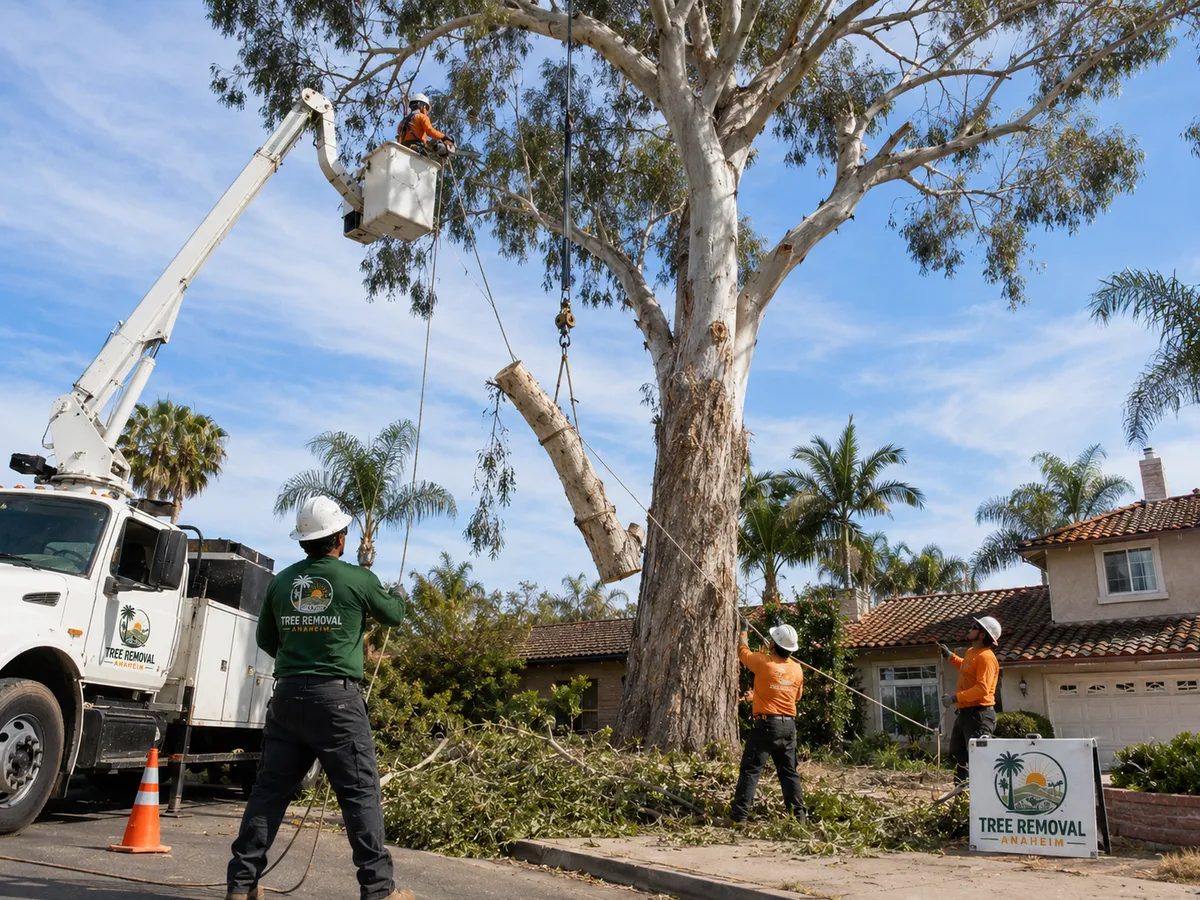
We determine whether the palm can be dismantled conventionally or whether additional rigging or lifting equipment makes better sense.
Remove the crown and trunk
The palm is reduced in controlled stages sized for the available lowering, landing, and handling space.
Process and clear the work area
Material is processed according to the agreed scope, and the immediate work area is cleaned before the crew finishes.