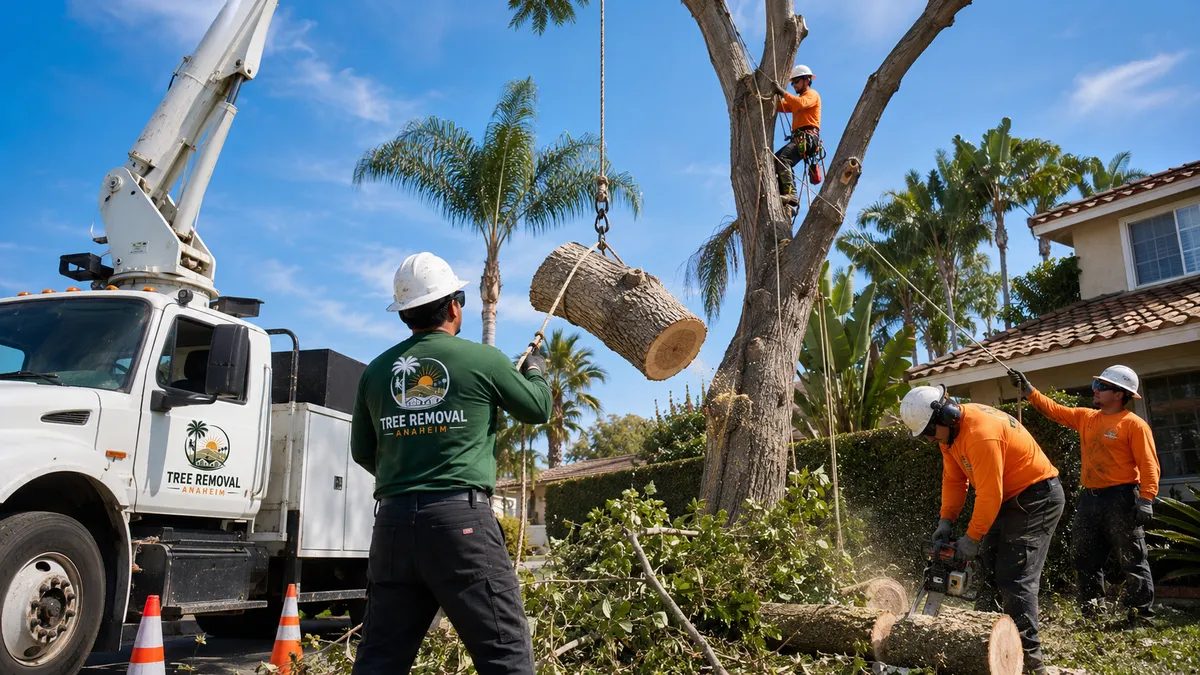
Anaheim-focused help for difficult tree take-downs
Tree Removal Anaheim
Need a problem tree taken down? Tell us what is happening, where the tree stands, and what surrounds it so the enquiry starts with the right information.
When Removing a Tree Is the Right Next Step
A mature tree can become a site problem for very different reasons. It may be dead or declining, leaning toward a building, dropping major limbs, crowding a wall or pool, interfering with planned construction, or simply be too large for the space available. In other cases, a storm, trunk split, root failure, or sudden change in condition turns a manageable issue into something that needs prompt attention.
Tree removal decisions start with the condition of the tree and the space around it. The important questions are whether the tree should come down, how it can be dismantled safely, what access is available, what sits inside the drop zone, and what equipment may be needed. A small tree with open access is a very different task from a tall palm beside a roof, a large eucalyptus over a yard, or a compromised trunk that cannot be climbed normally.
Before requesting an estimate, it helps to note the approximate height and species if known, visible damage or decay, how close the tree is to the home or neighboring structures, gate width, overhead lines, slopes, walls, pools, sheds, vehicles, and anything else that may affect access. Photos are useful because they show both the tree and the space around it.
Different Tree Problems Need Different Take-Down Plans
Different trees create different take-down problems, and the specialist removal services below address the main situations covered by this site. The specialist pages below go deeper into the situations most likely to need specialist planning around Anaheim properties.
Palm Take-Downs
Tall palms can put a heavy crown high above roofs, walls, driveways, pools, and neighboring spaces. The palm-removal page explains the access and sectional dismantling issues that matter when a palm is dead, unstable, badly placed, or no longer wanted.
Emergency Take-Downs
Storm damage, major limb failure, sudden leaning, or a split trunk can create an urgent situation. See emergency-removal page when a failed or unstable tree may pose an immediate risk to people, vehicles, buildings, or access routes.
Hazardous Trees
Some trees become high risk gradually rather than overnight. The hazardous-tree page covers unstable, cracked, structurally compromised, or poorly balanced trees where condition and surrounding targets need careful consideration.
Eucalyptus Take-Downs
Large eucalyptus can combine substantial height, spreading limbs, and heavy timber. Our eucalyptus removal information focuses on large or declining specimens, difficult positioning, debris handling, and the need to plan the site before cutting begins.
Crane-Assisted Take-Downs
A crane may be useful when a tree is very large, badly compromised, difficult to access, or positioned where conventional lowering would be impractical. Read about crane-assisted removal and the site conditions that can determine whether lifting sections is appropriate.
Dead & Diseased Trees
Dead and deteriorating trees can lose strength as decay progresses. The dead and diseased tree page explains why condition, brittle wood, failed limbs, access, and nearby surroundings can change the way a take-down needs to be planned.
How a Difficult Take-Down Is Planned
A professional plan should be based on the actual tree and site, not a standard method. The sequence below is the information that typically shapes the scope.
1. Tree condition and dimensions
Height, trunk diameter, canopy spread, species, deadwood, cavities, cracks, lean, root condition, and recent failures all affect the approach. A healthy tree being removed for space reasons may tolerate normal climbing and rigging; a severely weakened tree may need a different method.
2. Property access and surroundings
Access and nearby targets often determine the job more than height alone. Roofs, fences, block walls, patios, pools, landscaping, driveways, neighboring yards, slopes, narrow gates, parked vehicles, and overhead utilities can limit drop zones and equipment movement.
3. Dismantling method, equipment and site care
Where there is open space, sections may be handled more directly. Tight residential sites can require controlled rigging, smaller pieces, specialist access, or crane assistance. The aim is to choose a method that fits the tree, the available space, and the objects that must be protected.
4. Debris route and cleanup
The work does not end when the trunk is down. Branches, logs, and processing debris need a practical route out of the site or handling area. Gate width, stairs, slopes, soft ground, street access, and the distance to the truck can all affect time and the estimate, so cleanup expectations should be clear before work starts.
What Affects the Cost of Removing a Tree in Anaheim?
There is no sensible standard price for every tree. If you are comparing a tree service for a difficult take-down, the useful comparison is the actual scope required to get that particular tree down and clear the site. The largest influences are usually height, trunk diameter, condition, access, surrounding structures, equipment needs, and hauling volume.
A smaller tree in an open front area may be straightforward. A tall tree behind a house with narrow side access, no useful drop zone, a pool beneath the canopy, or a neighboring roof close by can require far more controlled handling. A dead or structurally weak tree may also be slower to dismantle because normal climbing or rigging options can be limited. Extra care may be needed where brittle wood or unstable sections restrict normal handling.
Crane use, traffic or access constraints, extensive processing, steep terrain, and difficult debris handling can all change the scope. The most useful estimate is therefore site-specific rather than based only on tree size.
Where overhead lines, shared boundaries, or access through neighboring land are involved, raise those points at the estimate stage. They can affect what can be done, who may need to be contacted, and how the job is scheduled.
Useful details for an estimate
- Property address or Anaheim neighborhood
- Approximate tree height and trunk diameter
- Species, if known
- Reason for taking the tree down
- Visible lean, cracks, dead sections, or storm damage
- Distance from the home, pool, wall, road, or utilities
- Gate width and vehicle or equipment access
- Clear photos showing the whole tree and surrounding area
Anaheim Coverage and Nearby Communities
The core coverage area is Anaheim, with enquiries also accepted from nearby Orange County communities. Site conditions can change substantially across the area: compact lots, mature landscaping, hillside access, pools, block walls, narrow side yards, larger suburban sites, and mixed residential-commercial settings can all alter the way a tree is approached.
Within Anaheim, see the dedicated pages for Anaheim Hills and West Anaheim. Nearby location pages cover Fullerton, Orange, Garden Grove, Buena Park, Placentia, Yorba Linda, Brea, Santa Ana, Cypress, and Villa Park.
If the tree is outside those locations but still nearby, use the contact page or call (657) 467-7902 with the address and a short description of the problem.
Questions About Tree Take-Downs
How much does it cost to remove a tree in Anaheim?
Cost depends on the individual tree and site. Height, species, condition, access, nearby buildings or utilities, rigging requirements, specialist equipment, debris volume, and the route used to remove material can all affect the quote. A site-specific estimate is more useful than a generic figure based only on height.
When should a tree be removed rather than left in place?
Common reasons include severe decline, structural damage, repeated major limb failure, root problems, an unstable lean, storm damage, conflict with buildings or planned construction, or a tree that has become unsuitable for the available space. The condition of the tree and the consequences of failure both matter.
Can a tree be removed when it is close to a house, wall, or pool?
Yes, but confined sites normally require more planning. Sections may need to be cut smaller, lowered under control, or lifted with specialist equipment so the method fits the available space. Photos of the tree and surrounding structures are especially useful when requesting an estimate.
Do you handle urgent or hazardous trees?
The site includes dedicated information for emergency situations and hazardous trees. If a tree has failed, is hanging over an occupied area, or appears immediately unstable, keep people away from the affected zone and mention the urgency when you call or submit the enquiry.
What information should I send for an estimate?
Give the address, approximate tree height, species if known, why it needs to come down, visible damage, access restrictions, nearby structures, and several clear photos. One photo should show the whole tree; additional photos should show the base, access route, and anything close to the canopy or trunk.
Can palms, eucalyptus, dead trees, and very large trees be assessed?
Yes. Those are the main specialist categories covered by this site. Use the relevant page for more detail, or submit one enquiry describing the tree and the site conditions so the right take-down approach can be considered.
Request an Estimate for a Problem Tree
Describe the tree, the reason it needs to come down, the address, and anything that could affect access. Photos can help clarify the scope before the next step.